
How does call tracking work, and is it safe for local SEO?
Call tracking gives each ad, page or source its own phone number that forwards to your real line, so you can see which one made the phone ring. It's safe for local search when your main number stays the main number everywhere: on your Google profile, your listings and in your website's code.
The short version
- Start free: phone-tap key events in Google Analytics and the calls figure in your Google profile.
- Paid call tracking adds a forwarding number per source, and logs which number rang.
- Static numbers suit print, signs and ads. Dynamic numbers swap on your website per visitor.
- Keep your main number as the main number on Google, on directories and in your page code.
- Tell callers if you record calls, and check your state’s rules on recording.
How does call tracking work?
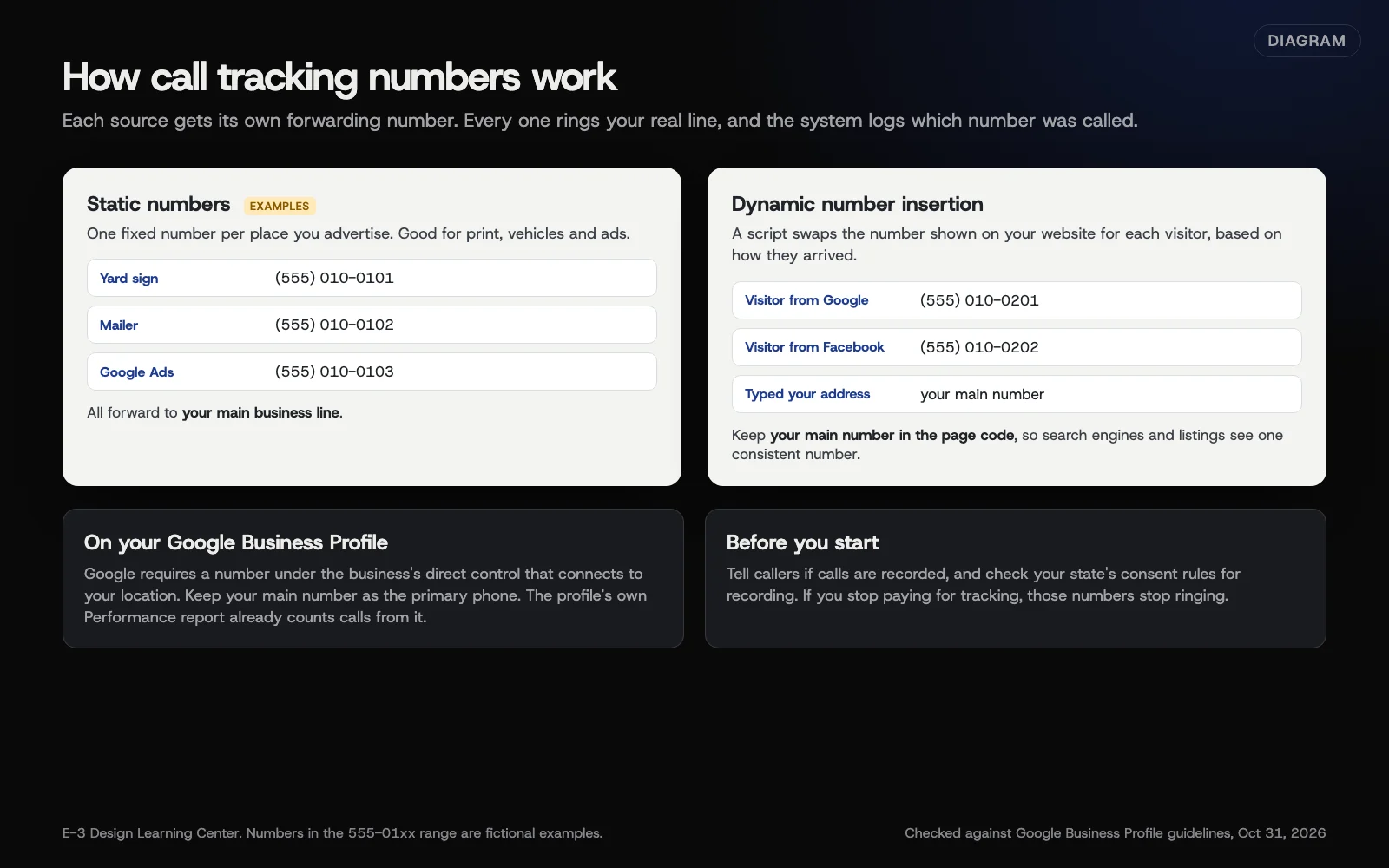 Diagram: static tracking numbers for offline sources and dynamic number insertion on a website, all forwarding to the main line. Numbers in the 555-01xx range are fictional examples.
A call tracking service rents you extra phone numbers. Each one forwards to your real line. When someone calls a tracking number, the service logs it, so you know which source made the phone ring. Many services can also record calls, send a text if you miss one, and pass the call to your CRM.
There are two kinds:
- Static numbers. One fixed number per source: the yard sign, the mailer, the radio ad. Simple and reliable, for anything offline.
- Dynamic number insertion. A script on your website swaps the number a visitor sees, based on how they arrived. Someone from a Google ad sees one number; someone from Facebook sees another. That shows which online source led to the call.
Do I need it?
Try the free options first. They answer most small business questions:
- Phone taps in Google Analytics. Record taps on your phone link as a key event; the Google Analytics guide to key events shows how. You’ll see which pages and sources lead to taps, though not whether the call connected.
- Your Google Business Profile. Its performance report counts clicks on the call button on your profile, not calls that actually connected, according to Google’s performance report help. See reading your performance report.
- Asking. “How did you hear about us?” on every first call, written down.
Paid tracking earns its cost when you spend real money on ads, mailers or radio and need to know which ones bring calls, or when most of your leads phone rather than fill in forms.
How do I use tracking numbers without hurting local search?
Your business name, address and phone number need to match everywhere they appear online. Tracking numbers that leak into directories cause mismatches. These rules keep things clean:
- Keep your main number as the primary phone on your Google Business Profile. This is our recommendation rather than a Google rule. Google’s guidelines say the number must be “under the direct control of the business” and should connect to your location, and they also allow additional phone numbers. Keeping the main number primary avoids a tracking number spreading to other listings. If you want a rough count of profile calls, the profile already counts call-button clicks.
- Keep your main number in the website’s code. With dynamic insertion, the number in the page code should be your main number, and the script swaps it only for visitors from tracked sources. Search engines then see one consistent number.
- Never put tracking numbers on directory listings unless you’re sure they’ll stay for years. Listings get copied from site to site. Our listings guide on how listings spread explains why.
- Don’t use premium-rate numbers. Google’s guidelines don’t allow them on profiles at all.
- Plan for stopping. If you cancel the service, its numbers stop ringing. Take tracking numbers off ads and print before you cancel, and keep any number that’s been widely published.
If you’re changing your main number for good, that’s a different job; see moving or getting a new phone number.
What about recording calls?
Many tracking services can record calls for training or to check how leads are handled. Recording law varies by state. The usual practice is a short message at the start of each call saying it may be recorded. This isn’t legal advice; check your state’s rules before turning recording on.
Why does call tracking matter?
For many local businesses, most new customers phone rather than fill in a form. Without some kind of tracking, the website and ads get credit only for forms, and the phone calls they produce stay invisible. Our answer on whether your website brings in calls and leads explains why counting calls matters as much as counting visits.
What are the common mistakes?
- A tracking number as the primary phone on Google. It spreads to other sites and is hard to undo.
- Tracking numbers on directories that later get cancelled, leaving dead numbers online.
- Dynamic insertion with the tracking number hard-coded in the page, so search engines see the wrong number.
- Too many numbers. One per channel is usually enough; one per page is hard to manage.
- Recording without telling callers.
- Never reviewing the reports. Tracking you don’t read is just a monthly bill.
What if the numbers don’t add up?
Calls in the tracking report won’t match GA4 phone taps exactly. Taps count people who pressed the link, including some who hung up, while tracking reports count calls to the tracking numbers from every source, including print. Check how your tracking service defines answered, missed and connected calls, because a logged call isn’t always a conversation. Compare trends month to month, not exact totals. If calls suddenly drop to zero, call each tracking number yourself to check it still forwards.
How much does it cost, and how long does it take?
Phone-tap events in GA4 and your Google profile’s call count are free. Call tracking services charge per number and per minute, and prices vary by provider. Setting up static numbers takes under an hour. Dynamic insertion means adding a script to the site and testing it, usually a few hours.
How does E-3 handle this?
Our leads and follow-up service uses HighLevel, which brings calls, texts and form leads into one leads inbox, with missed-call text-back. We recommend keeping your main number as the main number on your listings, and calling each tracking number yourself once it’s set up to check it forwards.
Related questions
Next step
- Next: How do I see which page each form lead came from?The next guide in Forms and lead follow-up.
- Free website checkPublic checks on your own site, then an action plan of what to fix first.
Still stuck? Ask E-3 for an answer from our help guides.
Rather we handled forms and lead follow-up for you?
It’s part of what we do every week for small businesses, as part of leads and highlevel. Start with a free check of your site and profile, or call and ask.